

Mannenberg 'is where it's happening'
On the passing of Abdullah Ibrahim (1934-2026)

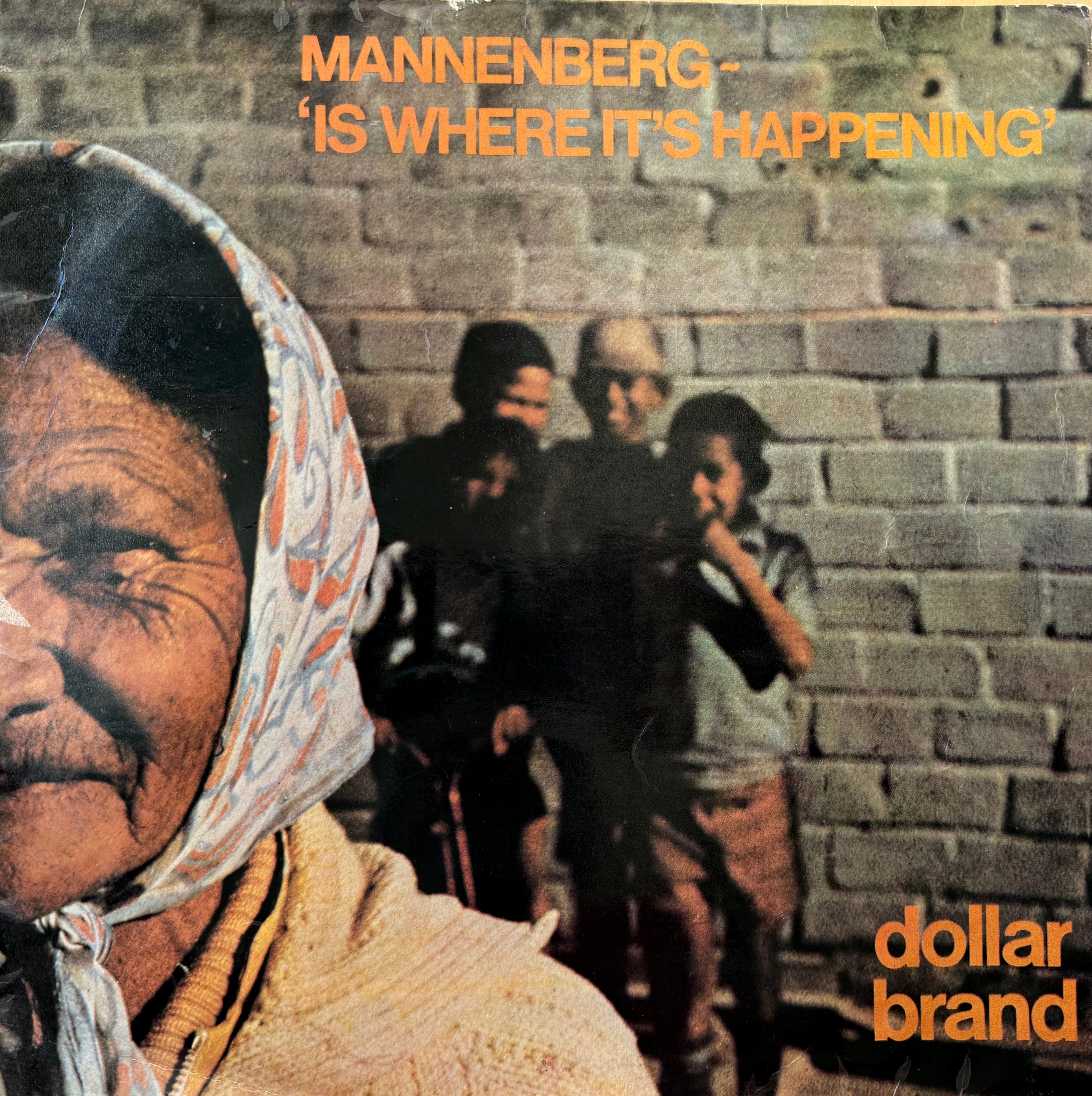
Note: This is something I wrote on Facebook thirteen years ago. My friend Rick Baitz reminded me of its existence, so I’ve revisited it and am posting it here to honor Abdullah Ibrahim, who died a couple of days ago. It takes me a while to get to him, but he is resoundingly there. Read on, if you will…
Growing up white in South Africa in the seventies was to grow up racist. It didn’t necessarily imply hatred, but the twinned concepts of “otherness” and “inferiority”were reinforced at every turn.
In my own young life, most of the African people I had any contact with were servants, notably those who passed through my parents’ employ with monotonous regularity. Jessie, the old lady from Matatiele: “she had tuberculosis, so we all had to get x-rayed.” Elphas: “perpetually stoned, with his sullen red eyes.” Lucy: “stole the watch”. Richard: “stole the reel-to-reel tape recorder AND the semi-useless telescope”(although by then I had enough social-conscience osmosed into me by my friend Shereen that I secretly celebrated the fact that he’d gotten away with the tape recorder — he was a musician after all. And I hoped he used the telescope more than I did). They all (as Miriam Makeba put it) “lived in the shacks, boys, they built for the blacks, boys,” out behind the house, adjacent to the banana trees. They were intimately entwined with our daily lives, and I didn’t even know their last names. Yes, these memories make me cringe.
The most “normal” contact I had with an African person up to that time was the brother of Mildred, one of our housemaids. His name was Jabulani, and my parents agreed to let him come and stay with Mildred out back for a while. He was awaiting trial for killing someone. Jabulani was a high-school student, so a “good” boy. He’d been accosted by a tsotsi (thug) in Umlazi township one Saturday morning, and managing to wrest the knife from the tsotsi’s grip, turned it on him with fatal consequences. So the story went. There were enough mitigating circumstances that he was — even in apartheid South Africa — able to get bail. Jabulani was kind, gentle, articulate (in English, which was major), and although our frames of reference were unbelievably different, we were able to connect across racial lines in a way that I’d never experienced before.
Of all my friends growing up, other than Shereen the one who seemed to have the easiest time around matters racial was Robbie Baitz. Robbie was American, originally from Los Angeles. His dad, a warm genial man, was a corporate exec of the type who did tours of duty in various countries; before coming to South Africa, the Baitzes had lived in Brazil for a number of years. So Robbie came pretty fully loaded to sleepy Durban. His family was very...American. They had a chauffeur named Reggie, who was floridly gay (I don’t think I’d ever been aware of meeting a gay person before). And Robbie had an elder brother, Ricky, who was a musician. Ricky was about the coolest person I’d met to that point in my life. He was American. He was an older brother. And he had long hair. Case closed! He also hung out with other musicians—I remember being over at their place one night when a local musical luminary/legend named Steve Fataar was visiting; the fact that a so-called colored man was socializing as an equal — possibly revered as a superior even — in the Baitz’s kitchen was revelatory.
Robbie and I became good friends. To say he was precocious would be a wild understatement. He was a tall gangly kid, utterly discoordinated on the sports field (sort of like me), his looks paused on the mezzanine on their journey from bratty kid to handsome youth (at the time he was largely tooth-braces and nostrils, with a lustrous pelt of jet-black hair). He used to stay with us when his folks traveled; for my fourteenth birthday he gave me this album, Mannenberg, by someone named Dollar Brand. I assumed that Ricky had influenced Robbie in the choice of the album.
First thing I noticed, of course, was the “bad” photograph on the cover. The crone, with half her face cropped out, and the leering little creeps behind her. In retrospect, I’m amused at how many of my OWN photographs seem to have been influenced by this picture! And then I put the record on the turntable...
Mannenberg is an anthemic song. It’s a shot across the bows. It’s an announcement, an arrival, a declaration, a dare. I didn’t know any of those things when I first put it on, and in some respects I don’t think it had quite attained its ultimate pantheon-worthy status yet (this would have been 1975 or so, a year after the album came out). It was certainly one of the strangest pieces of music to my naive ears. Dollar Brand was the pianist and bandleader (around this time he changed his name to Abdullah Ibrahim). He introduced the piece with an assertive riff on a keyboard that was as much harpsichord as piano. That riff provided the underpinning for the entire song — it just repeated over and over and over, which was intriguing to me.
Then the horns came in — again, these assertive, confident slashes of color, in no hurry at all to get where they might be going. After establishing themselves and settling in with the piano for a while, the sax lopes onto the scene. To say this was a life-changing sax solo would not be to understate the case. Certainly the sax player’s life was changed — forever after he would be known as Basil “Mannenberg” Coetzee! And for fourteen year old me, it was transformative. I played that record down to grooves, over and over. I inhabited that sax solo, and it inhabited (and continues to inhabit) me. It took me out of my parents’ living room, out into my own imaginary streets, it opened me to myriad dusty, smokey possibilities.
I have to wonder, why? I was pretty infertile ground, after all. It’s not as if I had any great love for, or exposure to, jazz. My love of African music in its myriad forms came much later. Mannenberg was hypnotically repetitive, yet it introduced me to a vernacular and then filigreed that vernacular, embellished and ornamented it. And if I thought that side was inaccessible, the B side of the album (”The Pilgrim”) was from another planet! Way less scrutable, practically beyond my powers of comprehension (and fifty years later I can hum every last unhummable bar...)
I got to meet Abdullah Ibrahim a bunch of times in New York, many many years later, usually before or during his regular gigs at the aptly-named Sweet Basil, and once outside the Chelsea Hotel, where he lived. He was gracious, a gent. And I was — and still am — a grateful fan.
Postscript: I’m posting this on Substack on June 16, 2026, which happens to be the 50th anniversary of the Soweto Uprising, a day which changed the course of history in South Africa, and on a more personal note, propelled my parents to shepherd me and my three siblings to a new life in America, which is where most of us have remained (the exception being my sister Tamsyn, who escaped to Switzerland many years ago.)
Fascinating! I read your piece while listening to Mannenberg. I want to read more stories from your childhood!
This is a beautiful post, JMS. I often wonder about your childhood and always appreciate your stories.